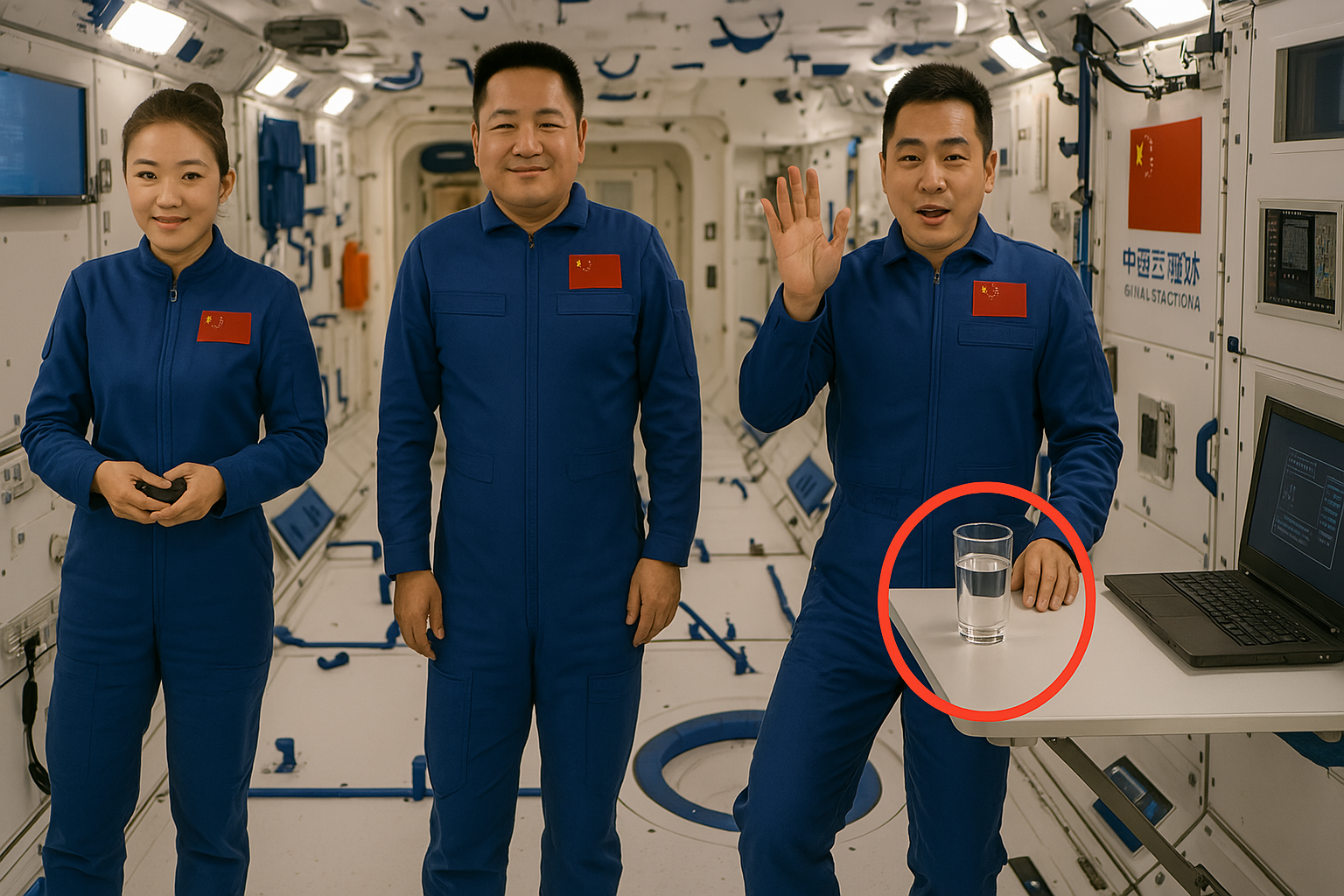
A recent video from Tiangong Space Station has set the internet ablaze, igniting a storm of speculation and curiosity. The footage, which shows a glass of water sitting motionless on a table despite being filmed in microgravity, left many viewers baffled. Some questioned whether it was truly recorded in space, fueling conspiracy theories about China’s ambitious space program.
The Science Behind the Still Water
At first glance, the video appears to defy expectations of how liquids behave in microgravity. Unlike free-floating droplets seen in previous space footage, this glass of water remained perfectly still, leading to claims that the footage might have been staged. However, scientists quickly stepped in to explain the phenomenon. The key factor? Surface tension—the same force that holds water in droplets—keeps the liquid stable inside the glass, preventing it from floating out.
The demonstration unintentionally turned into a lesson on physics, highlighting how everyday observations on Earth can be surprisingly different in space.
Internet Theories vs. Reality
While experts dismissed the conspiracies, the viral spread of the video showcased the growing global interest in space exploration. With China expanding its footprint beyond Earth’s orbit, skepticism often follows groundbreaking advancements. Tiangong’s astronauts continue to share educational content, including experiments showcasing buoyancy in microgravity, aiming to inspire curiosity rather than misinformation.
What’s Next for Tiangong?
Despite the online debate, the Tiangong Space Station remains an active hub for scientific research. A newly arrived crew is set to conduct experiments in medicine, material science, and astronomy, reinforcing China’s commitment to space innovation. With China planning a moon mission by 2030, Tiangong serves as a crucial stepping stone in the country’s long-term ambitions.
Whether intentional or not, the viral video has ignited discussions about space physics, skepticism, and the future of exploration—a testament to the power of social media in shaping how the world perceives scientific advancements.